Buying Planes in Pocket Pilots
From Skylark starter to Swallow speed, barn finds, paint, and a fleet that matches your licenses.
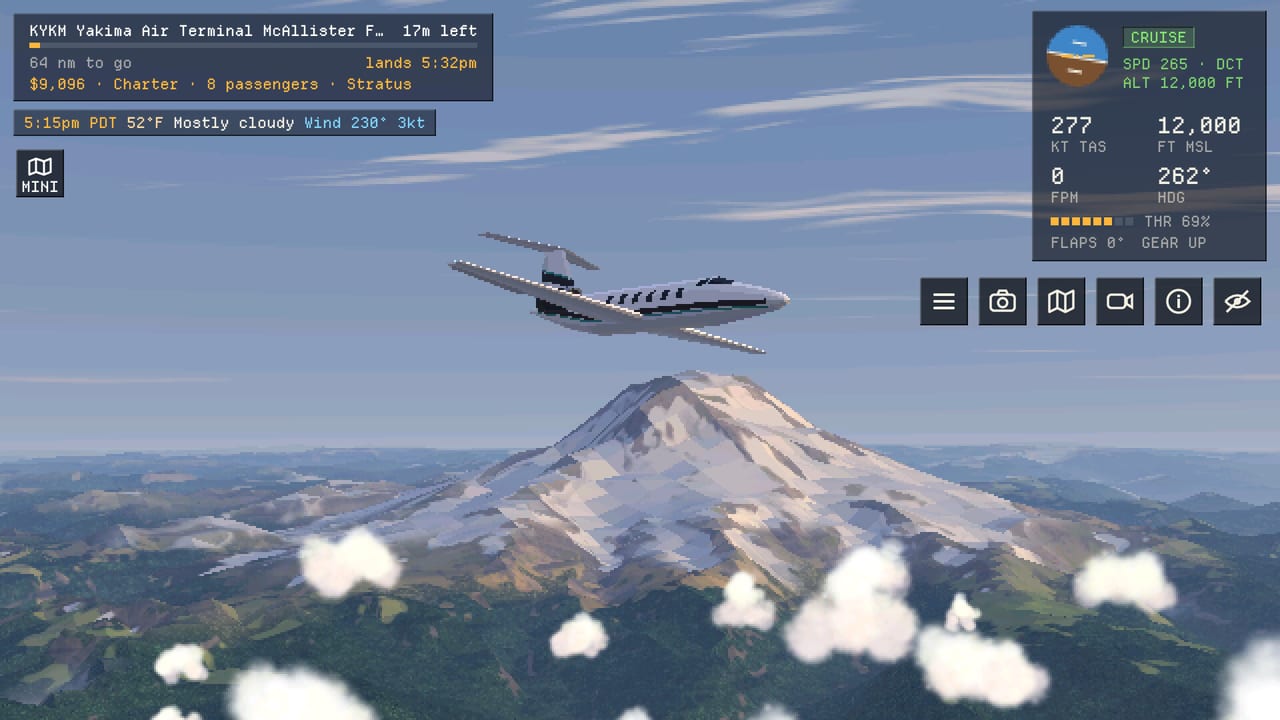
Growing a fleet is the heart of Pocket Pilots. You start with a humble Skylark and $2,500, then earn your way into bush planes, twins, turboprops, jets, and helicopters. This guide focuses on when to buy, what early airframes offer, how barn finds and paint fit in, and how to plan purchases around licenses and company goals.
Know what you already fly
The Skylark is your classroom. At roughly 122 knots it teaches job loading, real-time ETAs, and photo habits. Fly it until the bankroll and licenses support a clear upgrade — selling too early can leave you under-seated for the boards you wanted, while waiting forever leaves hours on the table.
When you sell, expect a meaningful recovery. Pilots stepping into the Swallow often reclaim on the order of tens of thousands from the Skylark, softening the next purchase. Keep the starter until the replacement is paid for and unlocked.
Early upgrade: Swallow versus Bushmaster
Two names dominate early hangar talk.
Swallow — commonly priced around $95,000 with cruise near 172 knots. That is a large speed jump over the Skylark. Faster cruise means the same regional charter finishes sooner, so evening sessions complete more cycles. If your board is full of short-to-medium passenger hops, speed is usually the first multiplier that pays for itself.
Bushmaster — leans into bush and field performance with a different seat/payload profile. Choose it when your home region and licenses favor strips and loads where the Swallow’s speed matters less than what you can carry into shorter or rougher environments.
Compare live prices and specs in your hangar shop before committing. Watch a full route in each mindset: time saved versus seats filled. The Make Money guide explains how that trade-off hits hourly earnings.
Climb the fixed-wing ladder
After the first upgrade, progression follows license gates as much as cash:
- Bush planes — expand remote and short-field work tied to early ratings.
- Twins — more seats and redundancy for thicker charter boards.
- Turboprops — regional workhorses; the Heron (~76 seats) is the quick, frugal turboprop airliner for dense short hops.
- Light and regional jets — Swift (5 seats, short strips), Zephyr (~50-seat regional), and Pelican (4 engines, ~85 seats, short steep runways) fill the mid band. Full roles and buy timing: Regional Jets.
- Heavy jets — airframes in the Condor / Albatross / Kestrel class bring wide-body and long-haul fantasy to the real map once you hold the tickets and bankroll.
Exact shop rotation can change with updates — check Updates after patches — but the career shape stays stable: licenses unlock the shelf, cash clears the purchase, paint and names make it yours.
Barn finds and restoration
Classic barn finds appear as restore projects: discover, invest, and bring a vintage airframe back to flight. Restorations reward explorers who roam beyond the usual job board grind. Budget both money and time; a restored classic can become a favorite scenic mount or a company showpiece.
Treat barn finds as parallel goals beside the main upgrade path. Keep a cash buffer so a tempting find never blocks the license-gated twin or regional jet you need for event week. The dedicated barn-finds guide covers how to hunt, what restoration usually costs in attention, and when a vintage hull deserves a permanent slot next to Swift or Heron shop buys.
Paint, names, and liveries
Every plane can be named and painted. Custom colors turn a Swallow into your Swallow. Liveries — including optional IAP packs — add polished schemes for pilots who want airline-ready looks. Cosmetics never change cruise speed, yet they make the shared sky feel personal when friends spot your company colors on approach.
Pilots Club and shop liveries are optional comfort and style. Free paint tools already cover a lot of identity.
Match airframe to mission
Before you buy, write a one-line mission for the new plane:
- “Faster San Diego coastal charters” → speed-focused light aircraft.
- “Alpine scenic tours with photo tips” → whatever handles the strips and looks great on camera.
- “Company heavy charter backbone” → twin or turboprop with seats friends can fill.
- “Pad and rooftop contracts” → start the helicopter path (see Helicopters).
Aircraft that match a real weekly routine earn back their price. Trophy jets that sit idle while you still fly Skylark-length hops drain the fund.
Company fleet planning
In a company, purchases become shared strategy. One member might specialize in a fast light plane for positioning; another holds a high-seat twin for event charters; a third restores a barn find for scenic branding. Shared bases let you stage the right hull where the board is hot. Invite codes bring friends into that hangar — details in Companies.
Agree on a buy order: licenses first, then the hull that unlocks the next event tier, then cosmetics.
When to sell versus keep
Keep an aircraft when it still fills a niche (short scenic hops, training new company members, photo runs). Sell when its niche is fully covered by a faster or roomier replacement and the cash unlocks a license-gated leap. Diversified fleets beat a single maxed hull for covering mixed boards.
Checklist before you tap Buy
- Confirm the required license in Licenses.
- Compare speed, seats/payload, and field performance for your home region.
- Ensure cash remains for fuel-of-progress: a few jobs of buffer after purchase.
- Decide whether the Skylark (or prior hull) sells now or stays as a second line.
- Plan a name and paint so the new plane feels owned on day one.
- Tell company members if the hull will be shared.
After the purchase
Fly the new plane on familiar routes first to feel the ETA change. Recalibrate the Make Money loop: longer legs may now fit an evening; photo windows move with higher cruise. Update your personal checklist in Getting Started style goals — next license, next hull, next event.
Return to the Guides Hub for sibling walkthroughs, and keep Controls bookmarked so hangar, map, and camera flows stay quick while you shop.
Buying planes in Pocket Pilots is less about collecting every type and more about fielding the right tool for the real-world jobs you love. Speed early, capacity when the board demands it, restorations for soul, and company coordination for the big charters — that mix builds a hangar that keeps paying.
Frequently Asked Questions
Quick answers for Pocket Pilots careers, fleets, and companies.
What plane should I buy after the Skylark?
Many pilots choose the Swallow for its ~172-knot cruise and roughly $95,000 price. Compare it with the Bushmaster if your routes favor payload and bush fields.
Should I sell the Skylark when I upgrade?
Selling recovers a useful chunk of cash once the new plane is funded and licensed. Keep it longer if you still want a second light line for short hops.
What are barn finds?
Barn finds are classic airframes you locate and restore. See the Barn Finds guide for the full hunt-and-restore loop; they sit beside shop purchases as longer-term fleet projects.
Do paint and liveries affect performance?
Paint and liveries change appearance and identity. Performance comes from the airframe, licenses, and how you schedule jobs.
How do licenses affect what I can buy?
Each license tier unlocks higher classes — bush, twin, turboprop, jet, helicopter, and related ratings. Cash alone is not enough without the ticket.