Helicopters in Pocket Pilots
Hummingbird to Stork — pads, rigs, rooftops, and scenic rotors over the real world.
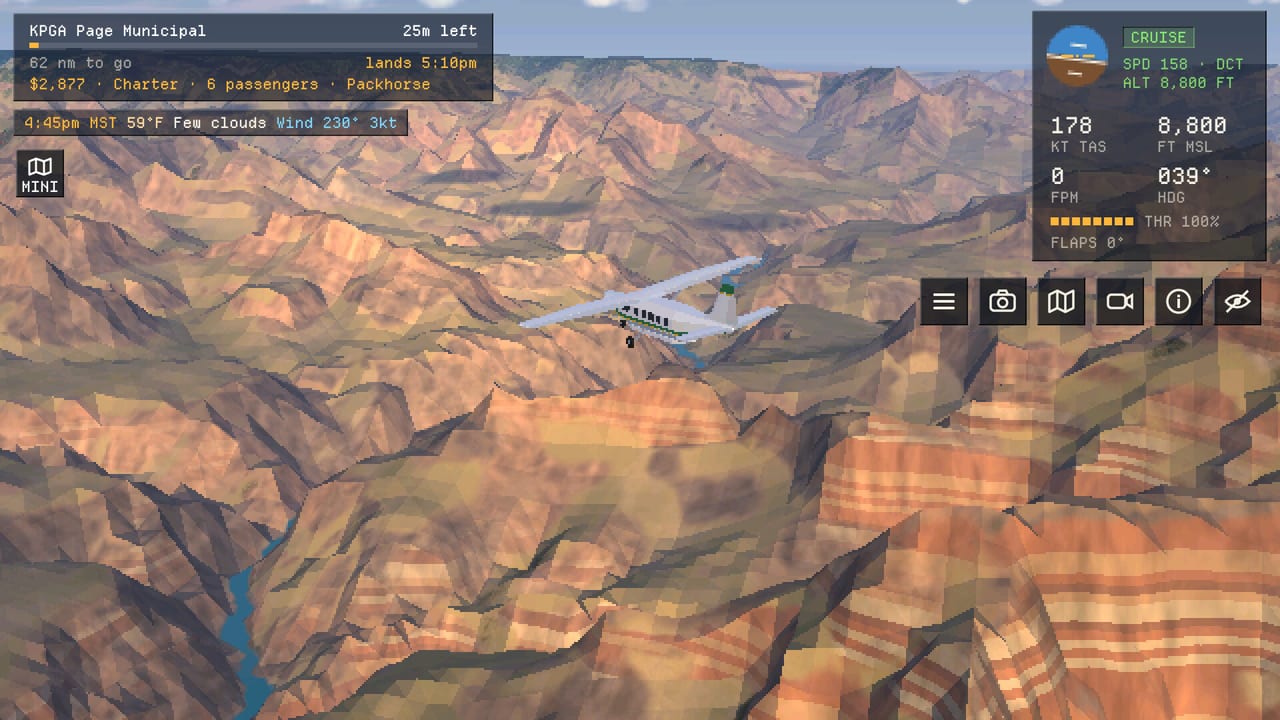
Helicopters rewrite the Pocket Pilots map. Runways stop being the only door into a job; hospital roofs, oil rigs, ships, and tight alpine pads become destinations. NimbleBit’s rotary fleet spans light three-seaters to twin-rotor heavy lifters, all flying the same live-weather, real-time world as the fixed-wing career. This guide covers the known helicopters, how they fit licenses and money, and where they shine.
Why fly rotors
Fixed-wing careers excel at airport-to-airport charters and long scenic corridors. Helicopters excel when the landing spot is a pad. That opens contracts and sightseeing lines airplanes skip: canyon rims, fjord ledges, rooftop transfers, offshore platforms. Photo tips still apply — Grand Canyon light, Kauai’s Nā Pali cliffs, Norwegian fjords, and Alpine lifts are natural rotor playgrounds.
Rotors also diversify a Companies fleet. While one friend hauls a turboprop charter into a major field, another can run a Petrel out to a rig or a Hummingbird between city pads.
The helicopter lineup
Hummingbird — light three-seater
The Hummingbird is the on-ramp. Three seats, lands anywhere a pad will do, perfect for learning hover-to-pad workflows and short urban or scenic hops. Use it to prove the rotary license path and to keep a cheap second line earning while bigger purchases cook.
Kingfisher — turbine five-seater
The Kingfisher steps into turbine performance with five seats. It bridges light utility and serious charter: more passengers per landing, still nimble enough for pads that would never see a twin airplane. Strong pick when your board shows multi-passenger pad jobs that outgrew the Hummingbird.
Thumper — 1969 utility classic
The Thumper brings big sliding doors and that two-blade thump. It is the character machine — utility heritage, great for players who love the look and sound of a classic workhorse. Fly it on mixed utility and scenic work where personality matters as much as seat count.
Petrel — twin-turbine twelve-seater
The Petrel is built for rigs, ships, and rooftops with twelve seats and twin turbines. When company charters need serious passenger volume into non-runway destinations, this is a prime shared asset. Stage it at coastal or energy-region bases where offshore and rooftop demand clusters.
Stork — twin-rotor heavy lifter
The Stork is the headline heavy: thirty seats, or ten tonnes slung beneath. Twin-rotor presence turns logistics and mass passenger moves into rotor problems. Save for late rotary career when licenses, cash, and company ambition align. Sling-capable work makes it unique even among large helicopters.
Licenses and unlock timing
Helicopter ratings sit beside the fixed-wing ladder described in Licenses. Unlock rotary tickets when you can fund at least a Hummingbird without starving the airplane upgrade you already promised yourself. Many pilots secure a solid Swallow-class earner first, then open the rotor tree; others dive into pads early if their home region is pad-dense.
Tilt-rotor licenses (called out in updates) sit near this conversation as hybrid options — watch Updates for how they overlap with pure helicopter missions.
Mission types that favor helicopters
- Pad charters — passengers whose destination is a roof, helipad, or platform.
- Offshore and ship work — Petrel territory especially.
- Scenic vertical tours — canyon, cliff, and alpine routes where low slow flight sells the view.
- Heavy lift / high capacity — Stork seats or sling loads for specialty contracts.
- Utility flavor flights — Thumper-led work that feels like classic helicopter ops.
Pair these with photo tips from Make Money whenever landmarks line the route.
Home base and staging
Choose staging airports near clusters of pads and scenery you love. Alpine starts favor Hummingbird and Kingfisher sightseeing. Coastal energy regions favor Petrel logistics. City-dense areas reward short pad hops all day. Company shared bases let you keep a rotor at the hotspot while airplanes live elsewhere.
Real-time flight still applies. A long fjord tour continues while you are away; check back for landing pay the same way you would with a Skylark charter.
Buying and fleet mix
Treat helicopters like a second airline inside your career:
- Earn the rating.
- Buy Hummingbird (or the lightest available) to learn pads.
- Add Kingfisher when five-seat jobs go unfilled.
- Specialize with Thumper for utility flavor or Petrel for volume.
- Crown the fleet with Stork when heavy lift economics make sense.
Paint and name rotors the same way you would fixed-wing ships — company colors look sharp on a Petrel parked beside a twin on the map. Barn-find energy is mostly a fixed-wing story; rotors lean on the shop lineup above. Cross-check prices in-game; balance patches can move numbers.
Company play with rotors
Shared helicopters multiply value. Assign roles: one pilot owns pad expertise, another funds the Petrel, a third coordinates event-week rotor tasks. Invite codes get friends into the hangar quickly — see Companies. Weekly world events that highlight scenic regions or special mission types are perfect for showing off a Kingfisher formation over real terrain.
Controls notes for rotor sessions
Camera work matters even more when you are hugging cliffs and pads. Use the flight watch tools from Controls to frame approaches, snap tips, and confirm pad alignment. Jumps can reposition a helicopter to a distant event region when organic ferry time is too long — optional, never required.
Suggested scenic playgrounds
Official trailers highlight Alps lift-offs, Grand Canyon runs, Kauai’s Nā Pali cliffs, and Norway’s fjords, plus hospital roofs and oil rigs. Build personal bucket lists: one alpine week, one canyon week, one offshore week. Variety keeps the logbook interesting and the photo album full.
How rotors fit the wider wiki path
- New to the game? Finish Getting Started before funding a Hummingbird.
- Need cash? Make Money.
- Comparing airplane buys? Buying Planes.
- Ticket planning? Licenses.
- Hub overview? Guides Hub.
Helicopters are Pocket Pilots at its most flexible: real weather, real time, and landing spots airplanes cannot touch. From the Hummingbird’s first pad to a Stork lifting ten tonnes, the rotor career turns the shared sky into a vertical playground worth every license stamp.
Frequently Asked Questions
Quick answers for Pocket Pilots careers, fleets, and companies.
What helicopters are in Pocket Pilots?
The lineup includes the Hummingbird (3-seat), Kingfisher (5-seat turbine), Thumper (1969 utility), Petrel (12-seat twin-turbine), and Stork (twin-rotor heavy with 30 seats or 10 tonnes slung).
Where can helicopters land?
Anywhere a pad works — including hospital roofs, oil rigs, ships, and scenic pads that fixed-wing aircraft cannot use.
Should I buy a helicopter before upgrading my airplane?
Many pilots secure a strong early airplane earner first, then open rotary ratings. Pad-rich home regions can justify an earlier Hummingbird.
Is the Stork good for companies?
Yes. Its seat count and sling capacity make it a flagship shared asset for heavy charters and specialty lift once licenses and cash allow.
Do helicopter flights also run in real time?
Yes. Rotor jobs use the same live clock and continue while you are away, just like airplane flights.