Companies & Co-op in Pocket Pilots
Share planes, bases, and big charters in one sky — invite codes and weekly world events included.
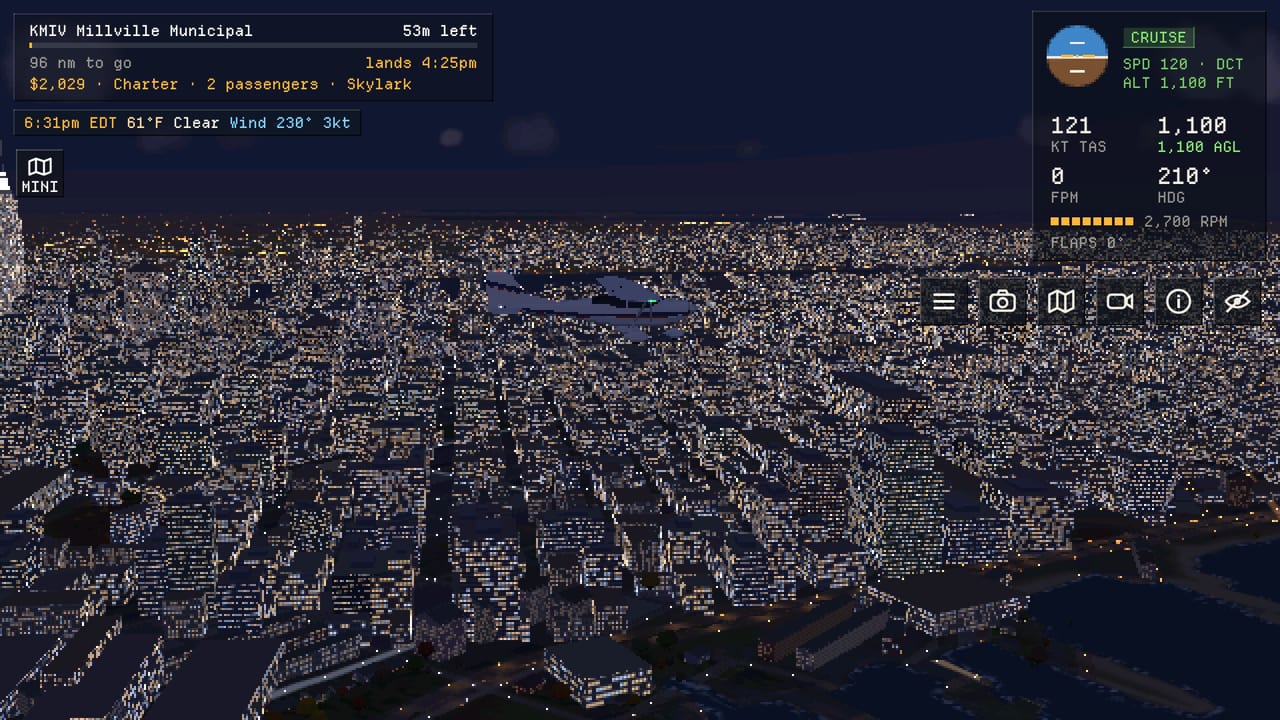
Pocket Pilots is a shared sky. Every career flies over the same real-world map with live weather, and companies turn that MMO backdrop into a crew you know by name. Start a company with friends, share planes and bases, tackle big charters together, and ride weekly world events as a group. This guide covers how co-op fits the solo loop, how invite codes work, and how to organize a hangar that stays busy across time zones.
What a company gives you
A company is a shared operation layered on top of personal careers. Members can share aircraft and bases, which means the twin you bought after grinding Licenses can stage at a friend’s coastal hub while you sleep. Big charters that need coordination become realistic: one pilot positions a turboprop, another fuels the passenger list, a third covers a helicopter leg into a pad the airplane cannot reach.
You still own a personal progression — Skylark hours, private cash, individual ratings — but the company’s pool of hulls and locations multiplies what the group can accept from the board.
Invite codes
Companies use invite codes so friends can join without awkward lobby hunting. Codes look like short alphanumeric strings; community examples use formats such as 6HC9TV. Share the code in your chat, Discord, or clan channel; newcomers redeem it in the company flow to sync into the shared hangar.
Keep a pinned message with the current code, a short rules blurb (shared plane etiquette, event focus), and links to this wiki’s Guides Hub. When someone new joins, point them at Getting Started so their personal career is healthy before they touch the shared Petrel.
Shared planes and bases
Shared planes let the group field specialized roles without everyone buying everything. Example roster:
- Light speedster (Swallow-class) for quick positioning and short charters.
- Twin or turboprop for dense passenger boards.
- Hummingbird or Kingfisher for pad work (Helicopters).
- Petrel or Stork when the company is ready for offshore volume or heavy lift.
- A barn-find classic as the scenic mascot (Buying Planes).
Shared bases place those hulls where demand lives. Alpine base for scenic rotors, coastal base for Petrel logistics, city base for pad hops. Members jump (optionally) or ferry organically between bases depending on patience and IAP comfort.
Write a simple basing plan in your company notes so nobody ferries the only twin to a dead board by accident.
Big charters and coordination
Large charters are the social set pieces. Before launch:
- Confirm who is available during the expected real-time window.
- Assign airframes — airplane into the main field, helicopter into the final pad if needed.
- Agree who watches the approach for photos and tip money (Make Money).
- Land, split the celebration, re-stage for the next board.
Because flights continue while people are away, asynchronous companies work well. A member in another timezone can launch a long leg that lands when you wake up. Treat ETAs as shared calendar events.
Weekly world events
Each week brings a world event that gives the whole sky a thematic goal. Companies that lean into the event board often climb standings faster and keep members logging in with purpose. Assign an “event captain” each week to post the focus region or mission type and to suggest which shared hulls to stage.
Events also help new members earn alongside veterans — the board tells everyone what matters right now.
Roles that keep a company healthy
- Quartermaster — tracks shared plane status and basing.
- Event captain — weekly focus and standings.
- Recruiter — invite codes, onboarding links to Getting Started.
- Chief pilot — license advice so members unlock twins / rotors on time.
- Scenic lead — photo-route ideas that double as tip income and social fun.
Small companies can merge roles; large ones benefit from clear hats.
Etiquette for shared fleets
Fly shared planes like borrowed cars you love. Finish or clearly hand off jobs, avoid parking a critical hull in a remote strip without a note, and announce big purchases in chat so the basing plan updates. Personal liveries and names still matter — company colors on a shared Petrel build identity in the MMO sky.
Solo career inside a company
Joining a company never replaces personal goals. Keep saving for your own Swallow, your own helicopter rating, your own barn find. Use shared assets to experience higher tiers early, then buy the hulls you want to main. That mix keeps motivation high when friends are offline.
Cross-device sign-in (Steam / Apple / Google) means you can check a company charter from phone and finish the evening on PC. See Controls for sign-in and UI tips.
Recruiting and growth
Start with people you already play with, then open a code when the hangar has room. Advertise the company fantasy: “real-world scenic tours, shared Petrel, weekly events.” Point recruits at Codes if you also track promo-style rewards on the wiki, and at Players for community-facing pages.
Set a soft member cap based on how many shared planes you can keep busy. Idle hulls help nobody; busy boards and clear roles do.
Company progression checklist
- Create or join via invite code.
- Pin code + basing plan + event captain name.
- Fund a shared light plane and one specialty hull (twin or helicopter).
- Complete one coordinated charter end-to-end.
- Ride a full weekly world event as a group.
- Expand toward Petrel / heavy jet / Stork when licenses and cash allow.
- Review etiquette monthly as the roster grows.
Ties to the rest of the career
Companies amplify every other guide on this wiki. Money loops scale with shared staging, plane buys become group decisions, licenses unlock who can legally fly the shared twin, helicopters add pad coverage, and controls literacy keeps chat focused on flying instead of “where is the job board.”
Pocket Pilots co-op is online and cross-play: the same sky hosts Steam, mobile, and browser pilots. Build a company that respects real flight times, celebrates night landings together, and treats invite codes as open hangar doors. The big charters feel better when friends’ names share the logbook entry.
Frequently Asked Questions
Quick answers for Pocket Pilots careers, fleets, and companies.
What do companies share in Pocket Pilots?
Companies let friends share planes and bases and cooperate on big charters while everyone still flies in the same real-world sky.
How do invite codes work?
Company invite codes are short codes (example format like 6HC9TV) that friends redeem to join your shared operation.
Is Pocket Pilots co-op online?
Yes. Co-op is online with an MMO-style shared sky, and careers can cross-play across Steam, mobile, and browser with sign-in.
What are weekly world events?
Each week features a world event that focuses the community on special goals. Companies that stage for the event board progress together.
Should I still buy my own planes in a company?
Yes. Shared fleets accelerate group jobs; personal hulls and licenses keep your solo sessions strong when friends are offline.